Operating vs Parallax: Unified PSA or Forecasting Layer?
TL;DR
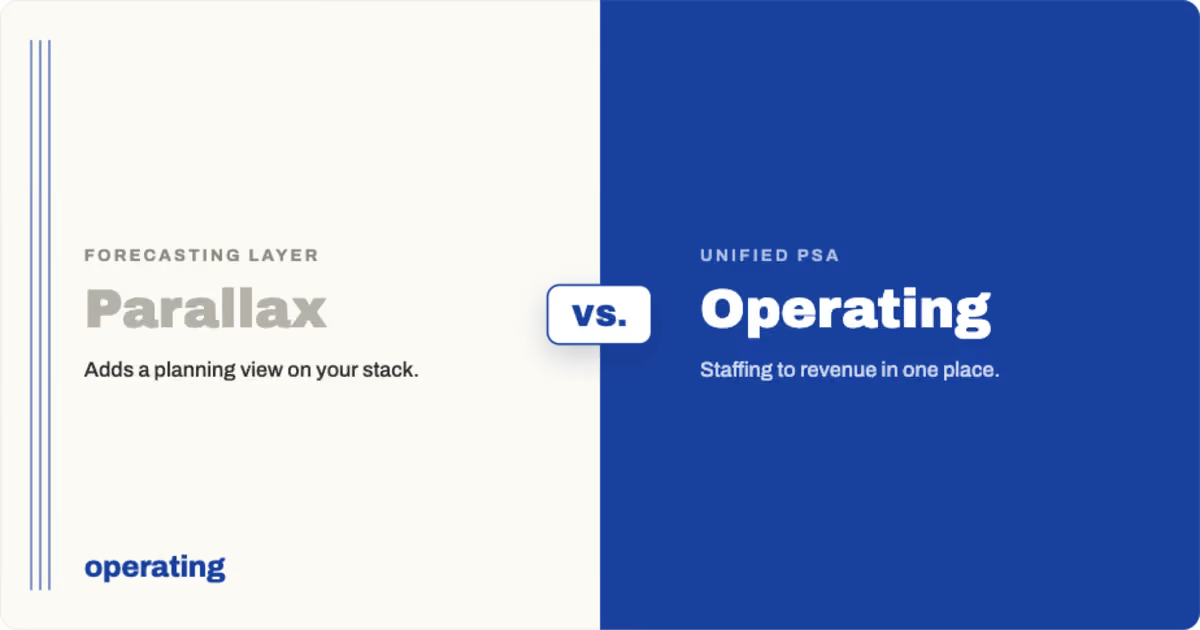
Operating is a unified PSA that handles the full loop from staffing to invoicing, making it the choice for firms seeking an AI-native system of record. Parallax is a strategic forecasting layer designed to sit atop an existing HubSpot and Harvest stack. Choose Operating for all-in-one efficiency; choose Parallax if you are an agency prioritizing specialized planning over stack consolidation.
The evidence on implementation and adoption
Procurement decisions in professional services often fail due to adoption friction rather than a lack of features. Operating addresses this with a unified architecture, allowing reduced unbilled time. It targets the 10–250 person firm with an entry price of roughly $12 per user monthly.
Parallax is a more established vendor, while it carries a higher $13,500 annual minimum, it offers a "white-glove" onboarding experience tailored to digital agencies that already have disciplined CRM and time-tracking processes in place.
Strategic fit: unified execution vs. forecasting layers
The choice depends on whether you intend to replace your tactical tools or augment them.
Operating: The unified execution layer
Operating is built for firms that want to plan projects, schedule resources based on skills and sentiment, track time, and generate invoices in one interface. It is technically ahead in the AI shift, offering the only production-ready Model Context Protocol (MCP) server in the PSA market. This allows operations leads to use agents like Claude to ask who is benched in March and write those allocations back to the system natively. For European or multi-country firms, its EU AWS hosting and native country-specific holiday calendars provide a level of localization Parallax currently lacks.
Parallax: The strategic planning layer
Parallax wins for firms that want strategic forecasting layer that excels at "pipeline-to-capacity" math. Its signature Shaper tool allows you to take a HubSpot deal at 60% probability and map out a resource plan before the deal closes, preventing over-hiring or delivery surprises. But requires an impeccable CRM setup, Parallax provides the deep, probability-weighted capacity curves needed to protect long-term margins.
PSA comparison table
Frequently asked questions
Does Parallax replace my time tracker?
No. Parallax is designed to sit on top of tools like Harvest, Toggl, or Clockify. It pulls data from these sources to generate forecasts but leaves the daily tactical logging to your existing stack.
Which tool is better for a HubSpot-centric firm?
Both integrate deeply with HubSpot. Operating is available in the HubSpot marketplace and treats deals as tentative projects for immediate staffing action and Parallax offers specialized field-mapping.
Can I run my staffing meetings through an AI agent?
Only with Operating. Its MCP server allows an operator to ask natural language questions about bench availability and write updates back to the system. Parallax’s AI is currently focused on deterministic forecasting assistants rather than agentic write-back.
What is the minimum cost of entry?
Operating starts at approximately $12 per person with no mandatory implementation fees. Parallax has a documented annual minimum of roughly $13,500, which makes it a more significant investment for smaller boutiques.
Sources
- Parallax, “Product,” getparallax.com/ [accessed June 2026]
- Parallax, “Support Knowledge Base,” support.getparallax.com [accessed June 2026]
- Baird Capital / PitchBook, Parallax Series B funding announcement (2021) [accessed June 2026]
- Operating, “Pricing,” operating.app/pricing [accessed June 2026]
- Operating, “Introducing Our MCP Server,” operating.app/blog-posts/ai-consulting-mcp-server [accessed June 2026]
- Operating REST API documentation, operating.readme.io [accessed June 2026]
Disclaimer: All data in this article reflects publicly available information as of the date of publication. Pricing, features, ownership, customer figures, and AI capabilities change frequently; verify current details with each vendor before making a procurement decision.