


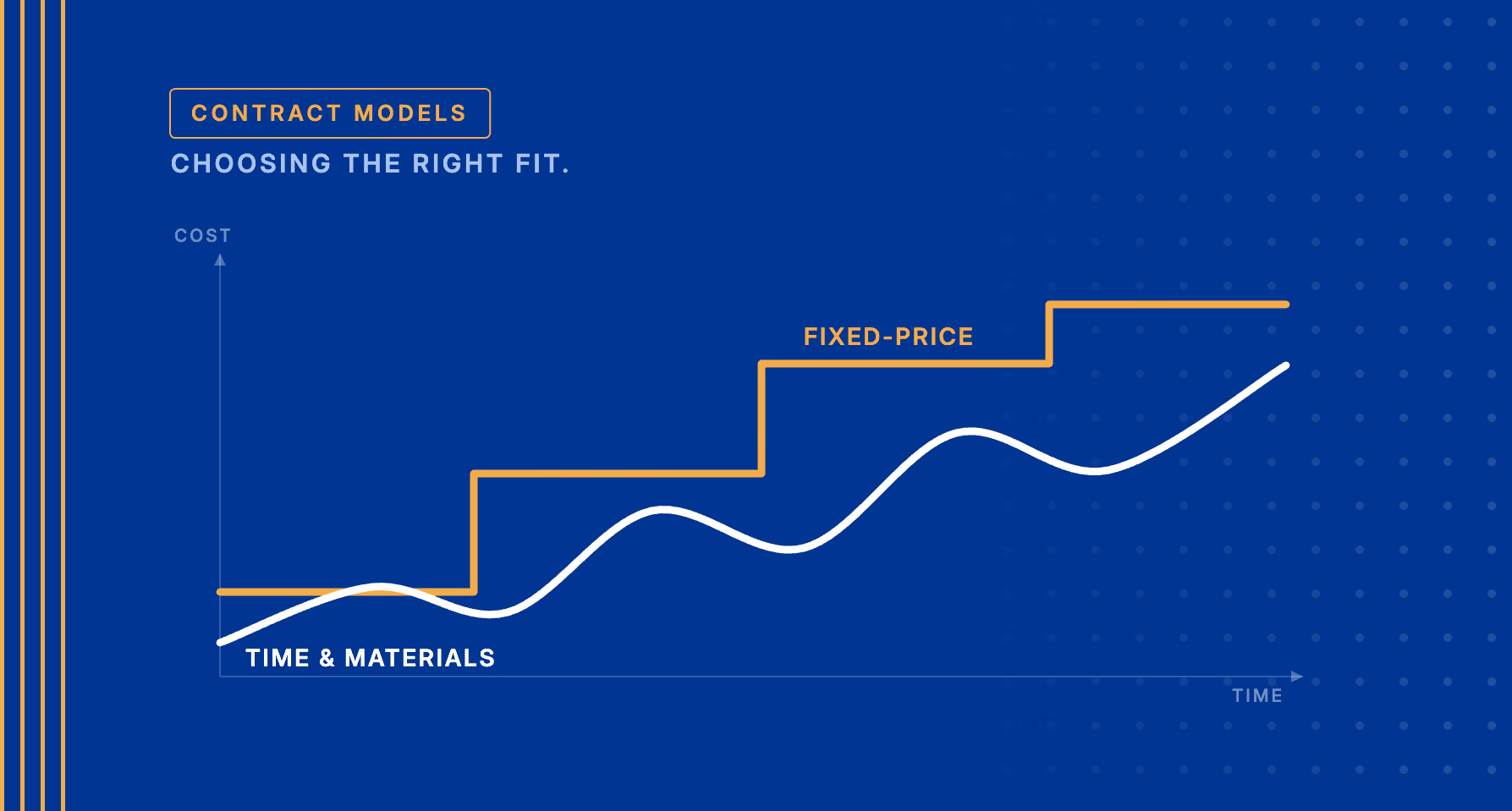
Quick summary: Choose fixed-price when scope is well defined and the client wants cost certainty, accepting that overruns cut your margin; choose time-and-materials when scope will evolve, since the client pays for hours actually worked. Capped time-and-materials gives the client a ceiling while keeping that flexibility. In Operating, time-and-materials revenue accrues as time is tracked at the applicable rate, while fixed-price revenue is recognized evenly by week, evenly by month, weighted by hours and rates, or cost-to-cost.
Selecting the right contract type is one of the most consequential decisions an operational leader makes for a project. It shapes profitability, budget control, and the day-to-day relationship with the client. Fixed-price and time-and-materials (T&M) contracts each carry distinct advantages and trade-offs, and the right choice depends on how well the scope is defined and who carries the risk if the work runs long.
This guide compares the two contract types, then shows how Operating handles each one in practice, including the billing types it supports, how revenue is recognized, and how you set and track project progress.
Quick comparison
Fixed-price contracts
A fixed-price contract sets one price for the whole engagement, agreed before work begins. The appeal is predictability: the client knows the cost up front, and the provider has a clear revenue target to plan resources against.
Best fit: projects with a well-defined scope and stable requirements, such as a build with a detailed specification, or an advisory engagement with a clear deliverable and end point.
The trade-off: the provider absorbs the cost of any overrun. If the work takes longer than estimated, the margin shrinks. This makes scope discipline and a clear change-order process essential.
T&M contracts
A time-and-materials contract bills for the hours actually worked plus any materials or expenses, at agreed rates. It trades the certainty of a fixed price for the flexibility to adapt as the work unfolds.
Best fit: projects where the scope is expected to move, such as discovery work, research and development, or ongoing advisory where priorities shift over time.
The trade-off: the final cost is not known in advance, so both sides need ongoing visibility into hours and spend. A budget cap (see capped T&M below) is a common way to give the client a ceiling while keeping the flexibility.
How Operating handles each contract type
Operating supports four billing types on a project, set per project:
- Time and materials. Revenue accrues as time is tracked, at the rate that applies to the work.
- Capped time and materials. The same as T&M, but revenue is limited by a budget ceiling. Expenses count against the cap first, and the remaining budget is available for tracked work. Revenue never exceeds the cap.
- Fixed-price. One agreed price, recognized over the life of the project using a revenue recognition method (below).
- Non-billable. Internal or pro-bono work that generates cost but no revenue.
Rates for billable work come from rate cards, which set an hourly rate by role. A project can use a company-wide rate card or its own project-specific rates.
Note: some billing types and recognition methods (for example, capped T&M and cost-to-cost) may need to be enabled for your workspace. If you don't see an option described here, contact support.
Revenue recognition
This is where fixed-price and T&M differ most in the product.
T&M and capped T&M recognize revenue as work is tracked: hours worked multiplied by the applicable rate. There is no separate recognition schedule, so the revenue follows the time entries. For capped T&M, recognition stops once the budget ceiling is reached.
Fixed-price projects recognize the agreed price over time using one of four methods:
- Evenly by week. The budget is spread in equal amounts across the weeks of the project.
- Evenly by month. The budget is spread in equal amounts across the months.
- Weighted by hours and rates. Revenue is recognized in proportion to the value of work done, weighting tracked hours by their rates.
- Cost-to-cost. Revenue is recognized in proportion to completion, measured as actual cost to date divided by planned cost. As real costs accumulate against the plan, recognized revenue keeps pace.
Budgets define the date ranges and amounts that revenue is recognized into. For a fixed-price project, the budget is the pool that the chosen method distributes over time.
Setting and tracking project progress
How "progress" works depends on the recognition method:
- The even methods (by week or month) are time-based. Progress follows the calendar, with no input needed.
- Weighted by hours and rates and cost-to-cost derive progress automatically from the work. Cost-to-cost, for example, calculates completion as actual cost divided by planned cost, so logging time and expenses moves the project forward without any extra step.
- Manual progress entries let you record completion directly when you want to recognize revenue at a specific point, for example when a deliverable is accepted. A progress entry records a monetary progress amount on a given date, with an optional note explaining it. This is useful when revenue should be recognized on acceptance rather than as costs accrue.
In short: for most fixed-price projects, progress takes care of itself as you track work against the plan. When you need to recognize revenue at a defined moment, a manual progress entry gives you that control.
Which should you choose?
Choose fixed-price if the scope is well defined and stable, the client values cost certainty, and you are confident in your estimate. Pair it with a clear change-order process so scope changes don't quietly erode the margin.
Choose T&M if the scope is likely to evolve, the work is exploratory, or you want the client to pay for the actual time spent. Consider capped T&M when the client needs a ceiling but you want to keep the flexibility of billing for actual time.
The deciding questions are usually: How well is the scope defined? Who should carry the risk of an overrun? And does the client need a fixed number up front, or visibility into actual spend? Your answers point to the right contract type, and Operating supports each one.
FAQ
What is the main advantage of fixed-price contracts?
Fixed-price contracts offer predictable costs, which help clients with budget planning and give providers a clear revenue target to plan resources around.
Why might a T&M contract be preferable?
T&M contracts are flexible, which suits projects with evolving scope. The work can adjust as priorities change, and the client pays for the time actually worked.
How do fixed-price contracts handle scope changes?
Through a change-order process. Because the price is fixed, any change to scope should be agreed and repriced explicitly to avoid disputes over additional work.
How does revenue recognition differ between fixed-price and T&M in Operating?
T&M and capped T&M recognize revenue as work is tracked: hours worked multiplied by the rate. Fixed-price projects recognize the agreed price over time using one of four methods: evenly by week, evenly by month, weighted by hours and rates, or cost-to-cost.


