


Project staffing, from open position to the right person
Scheduling keeps everyone busy; staffing decides who goes where. Operating puts every open position next to every available person — skills, seniority, site, team, availability — so the decision is made with the whole picture, not a hunch.
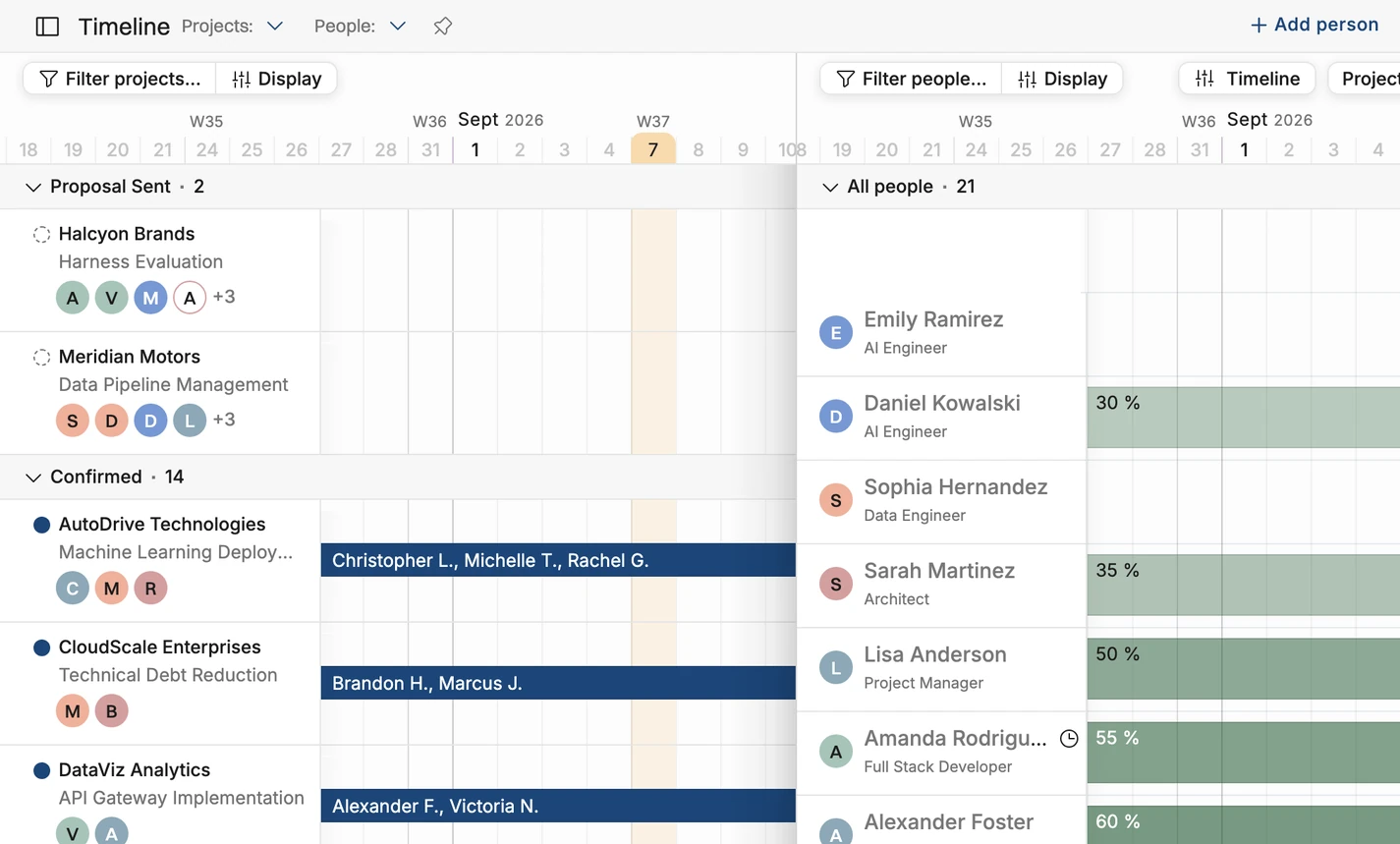

Every open position, fully described
Role, seniority, skills, site, team and the hours needed sit on the position — and you filter available people on exactly the same dimensions.

Know which decision to make first
See what an unfilled position costs and what each person needs next — with AI staffing suggestions across the firm through the MCP server.

End bench time with a concrete plan
See who is free and from when, then give unstaffed people tentative assignments and a concrete plan.
Open positions, with everything a decision needs
"We need a developer with AI experience, half-time, from March" is a specific staffing need, not a row in a spreadsheet. In Operating, every open position carries its characteristics, and every candidate can be filtered on the same dimensions.
Positions carry role, seniority, skills, site, team, and the hours needed
Filter available people on exactly the same dimensions
Every open position across the portfolio, in one view
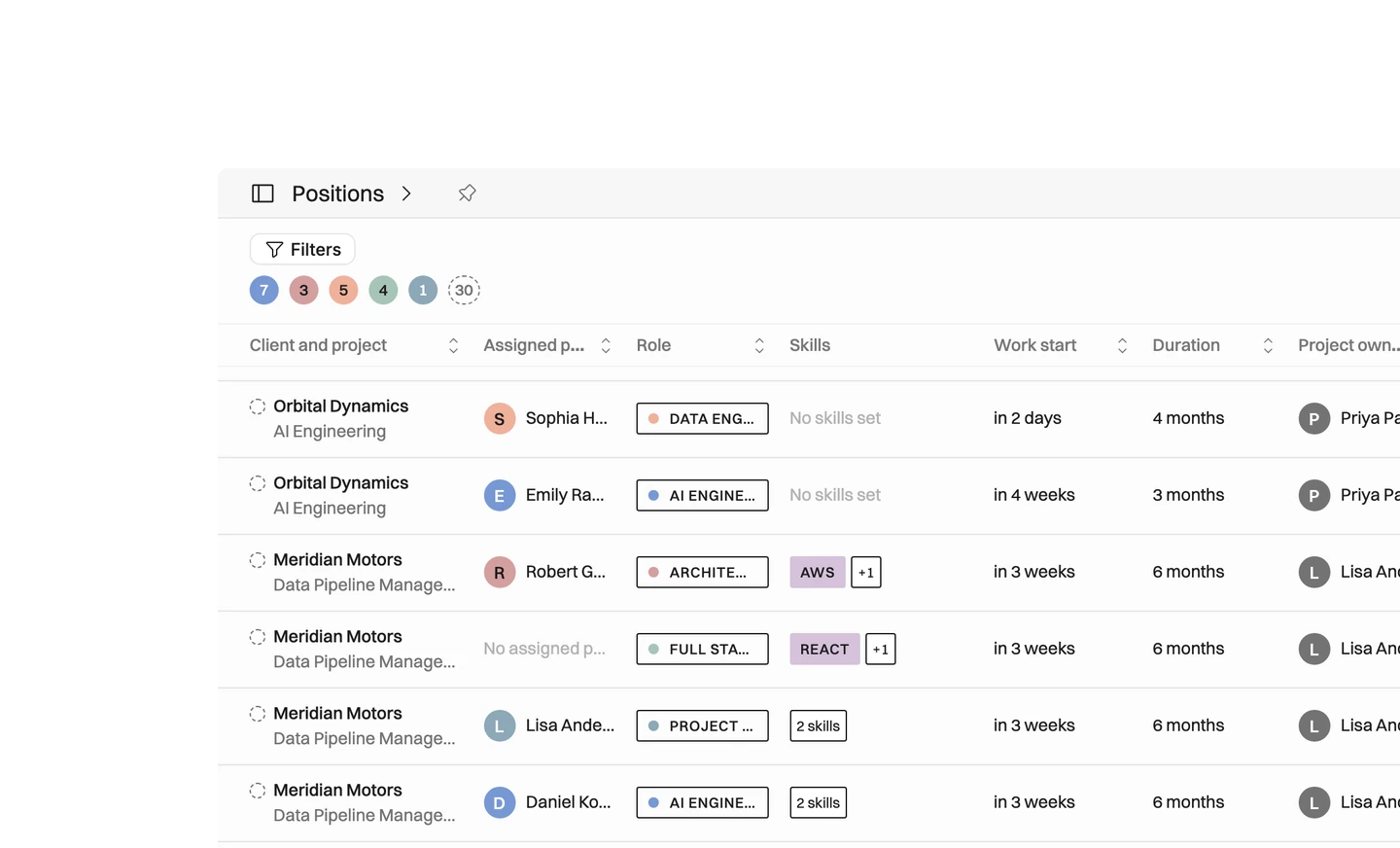





Prioritize staffing based on margin
Ten open positions, four available people: order matters. Operating shows which decisions to make first — what an unfilled position costs, what the person needs next — and at scale, AI does the legwork: Operating's MCP server generates staffing suggestions across the whole firm.
Prioritize staffing decisions financially and for the people
AI staffing suggestions at scale, through Operating's MCP server
Rebalance the overbooked while you fill the gaps
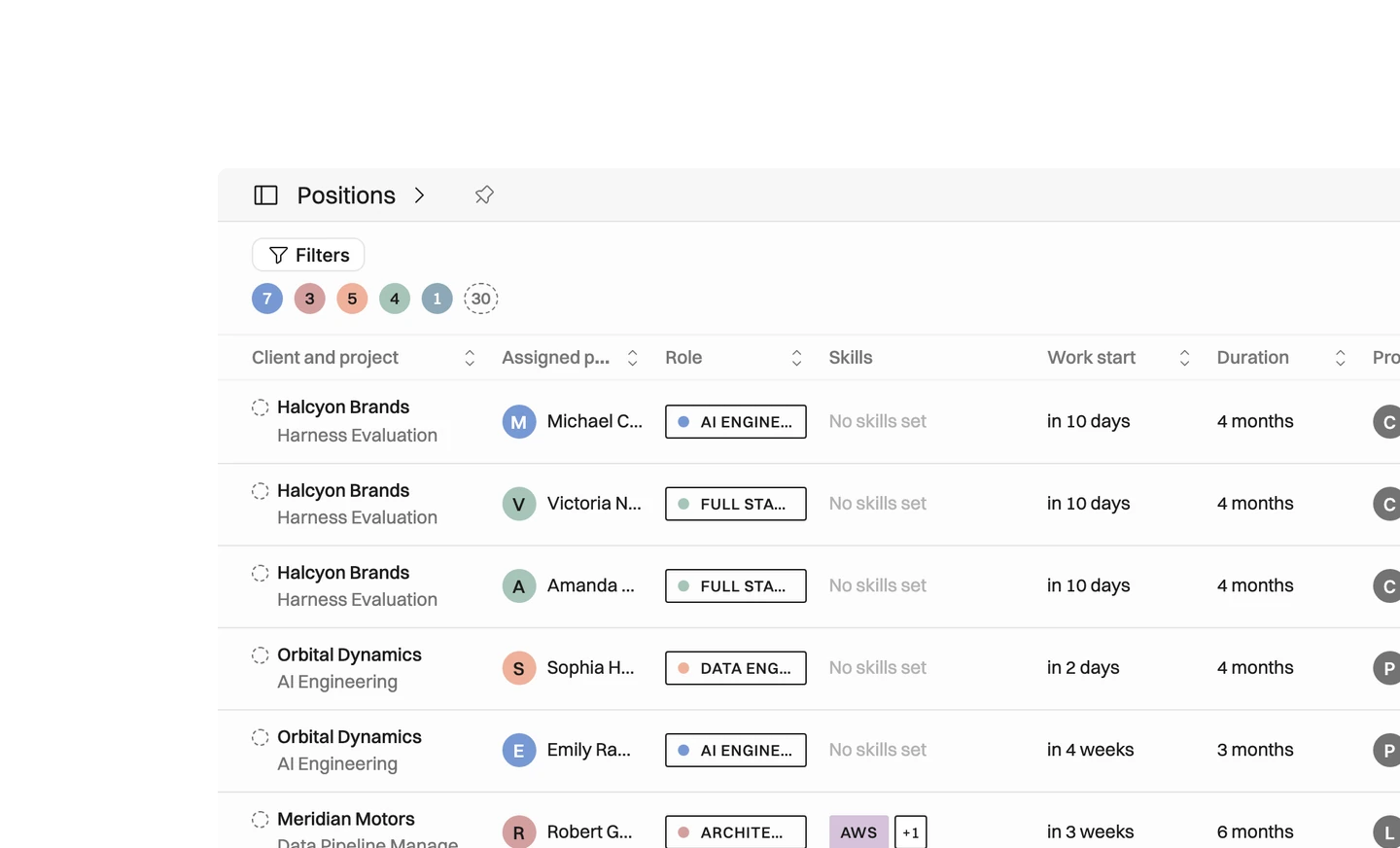
Clear the bench
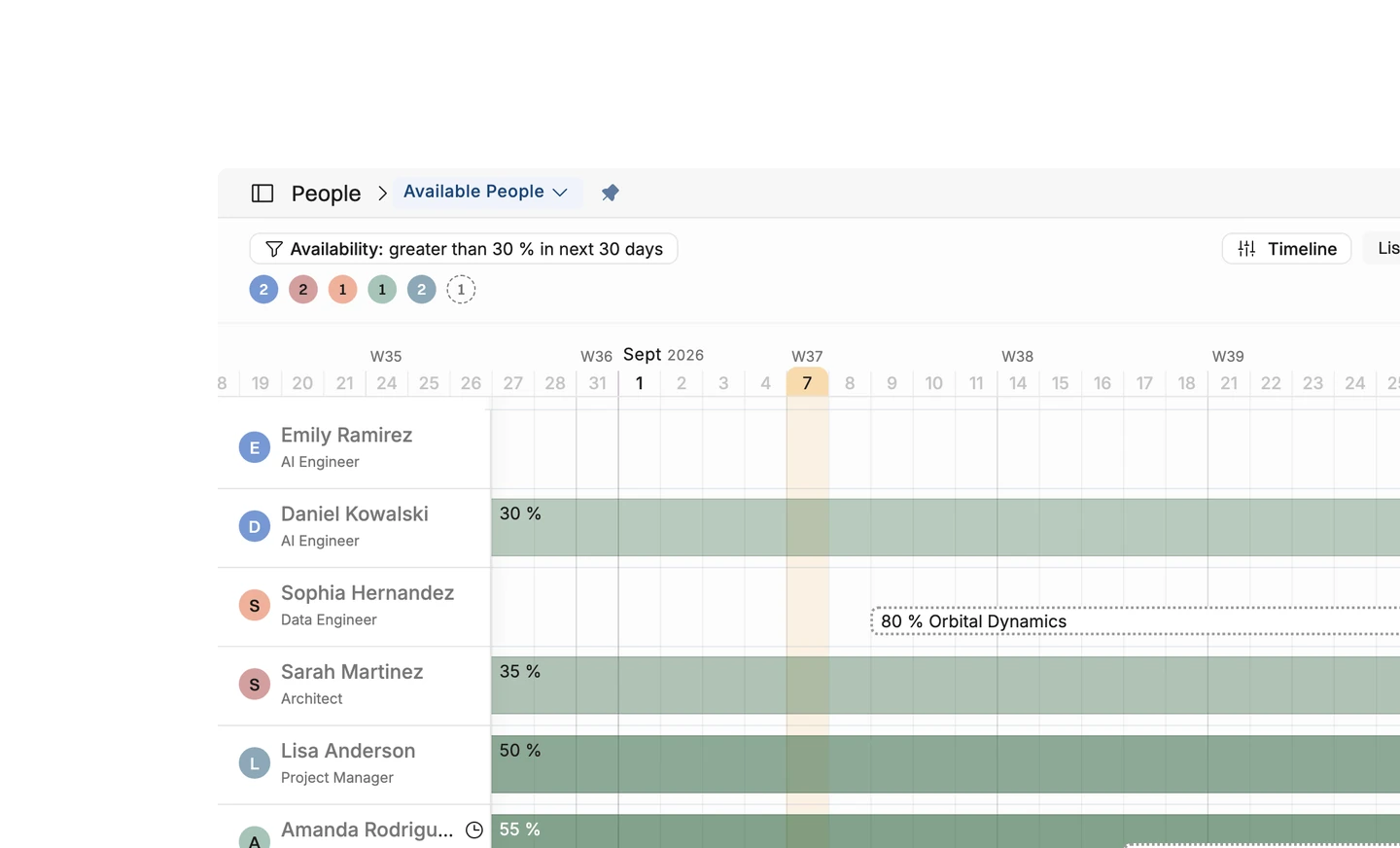
Bench time you can see is bench time you can end. Operating shows who is free and from when, so people without work get tentative assignments and concrete plans.
The bench visible: who's free, from when, with what skills
Tentative assignments give unstaffed people a concrete plan
Availability and skills side by side, so bench time ends faster
Why treat staffing as its own decision?
Scheduling keeps everyone busy. Staffing decides who goes where.

A calendar can tell you a person has room in March. It cannot tell you whether they are the right person for the position that opens in March. Those are different questions, and only one of them decides whether the project goes well.
So an open position is treated as a specific staffing need, not a row in a spreadsheet — it carries its role, seniority, skills, site, team, and how much of someone it needs.
Because the position and the people are described on the same dimensions, the shortlist is a filter rather than a memory exercise. And when there are ten positions and four available people, order becomes the decision: Operating shows what an unfilled position costs and what each person needs next, so you start where it matters.
The same view answers the other half of the problem. Bench time you can see is bench time you can end — who is free, from when, with what skills — so unstaffed people get tentative assignments and a concrete plan instead of another week of waiting to hear something.


Get the Operating Routine for resource planning
A weekly routine for staffing and capacity, written by people who ran it in their own firms. It gives your resource planning meeting a fixed agenda and a short list of numbers to check. Get the guide.
Thank you!
Get the Staffing Routine by clicking below.
Download guide
